
A Forest of Arrows
Analogue photographs and words by Jacob Martin
I climbed down, around and then scrambled across before squeezing through a gap and climbing up a face. I looked around, “there it is” before continuing on to it, then on to the next and the next. I was following a set of the red arrows scattered around the forest of Fontainebleau first painted in 1947 by Fred Bernick.
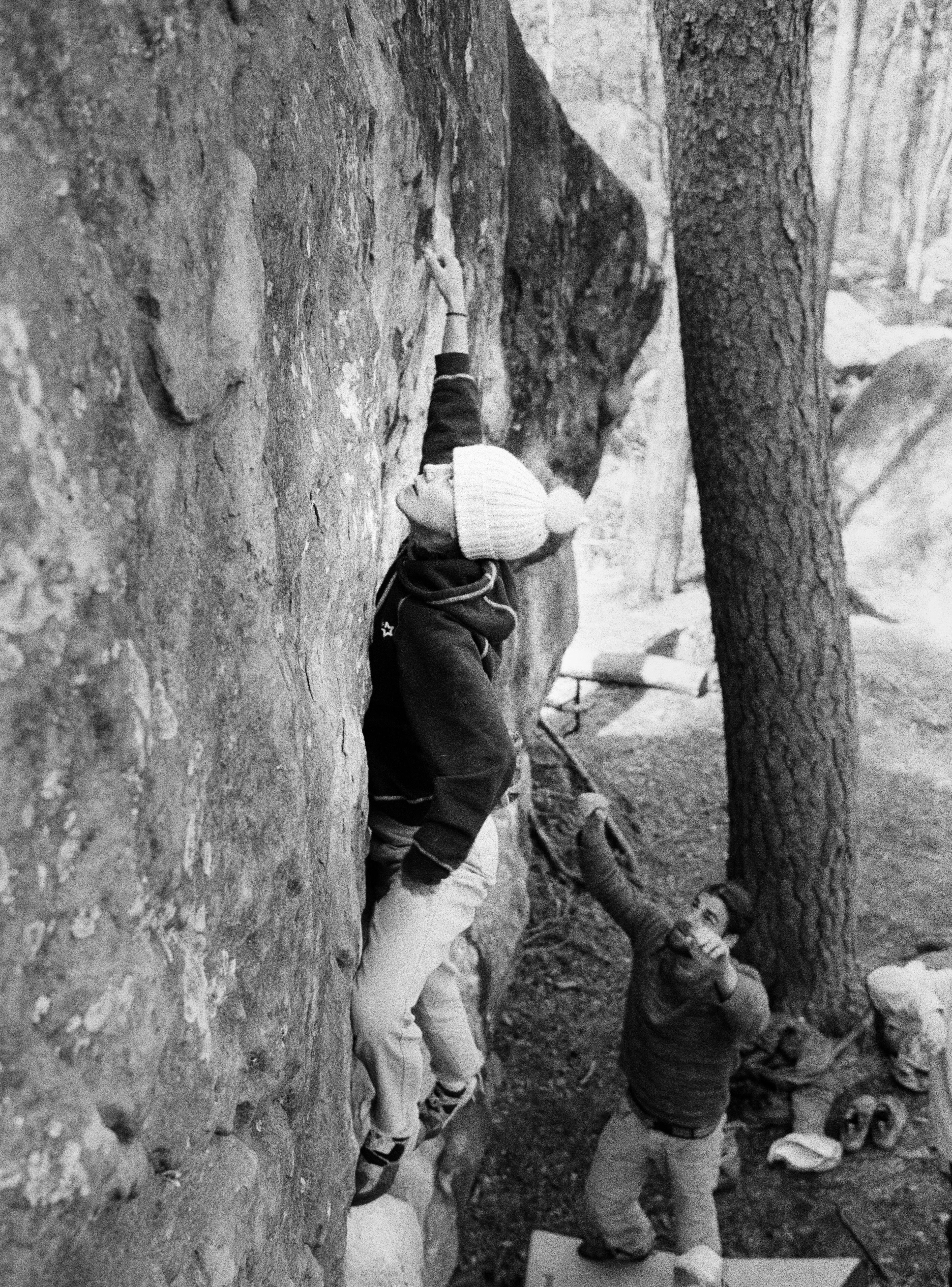
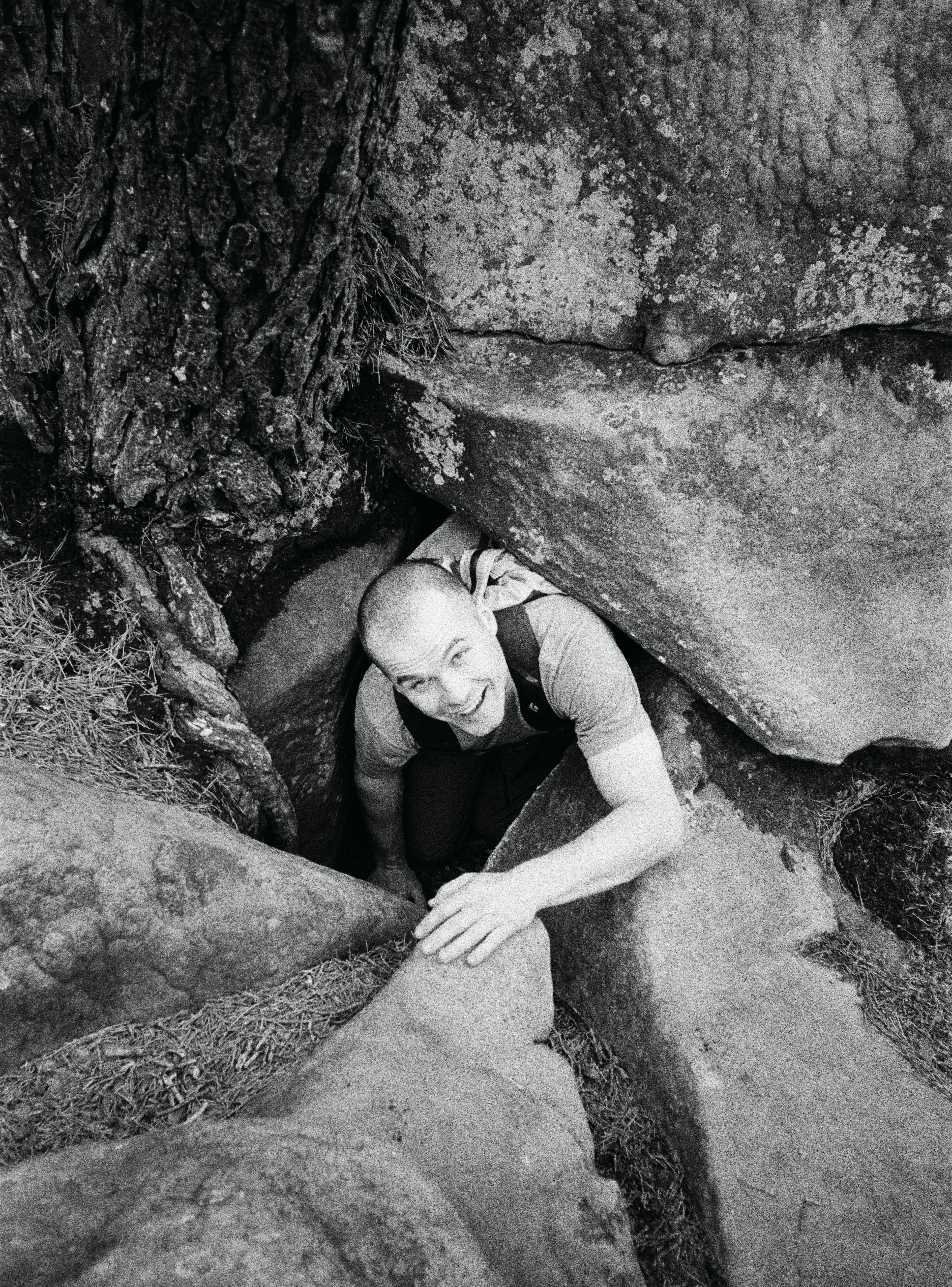
For those who haven’t been, Fontainebleau is the birthplace of bouldering and most would argue the best place to practise the sport anywhere in the world. There are thousands upon thousands of sandstone boulders spread around a huge forest just south of Paris. Those who have been to climb in Fontainebleau will be quite familiar with seeing the arrows as they wonder about and almost all of them will have followed at least one or two to the top of a boulder. Most may have not given them a whole lot of thought but I find their style, design and imperfect elegance all so fascinating.
These red arrows I was following one day in March this year take you in a big loop around the rocky ridgeline of Cuvier Rempart, a quieter but still popular area next to its busy neighbour Bas Cuvier. Most would see them just like any other set of arrows in this forest, but these ones are special, these are the arrows of Fontainebleau’s first circuit and the start of something unique that continues to this day.
This all probably seems quite confusing to those of you who’ve never climbed or visited the forest. My obsession with these modern day cave paintings may even be confusing to those of you who’ve spent a lot of time there. I like these details however, l like how humans and nature are as one, they simply mark the path, share an idea and say “give this a go”. They work as one and they work together to help turn this forest into a giant playground.
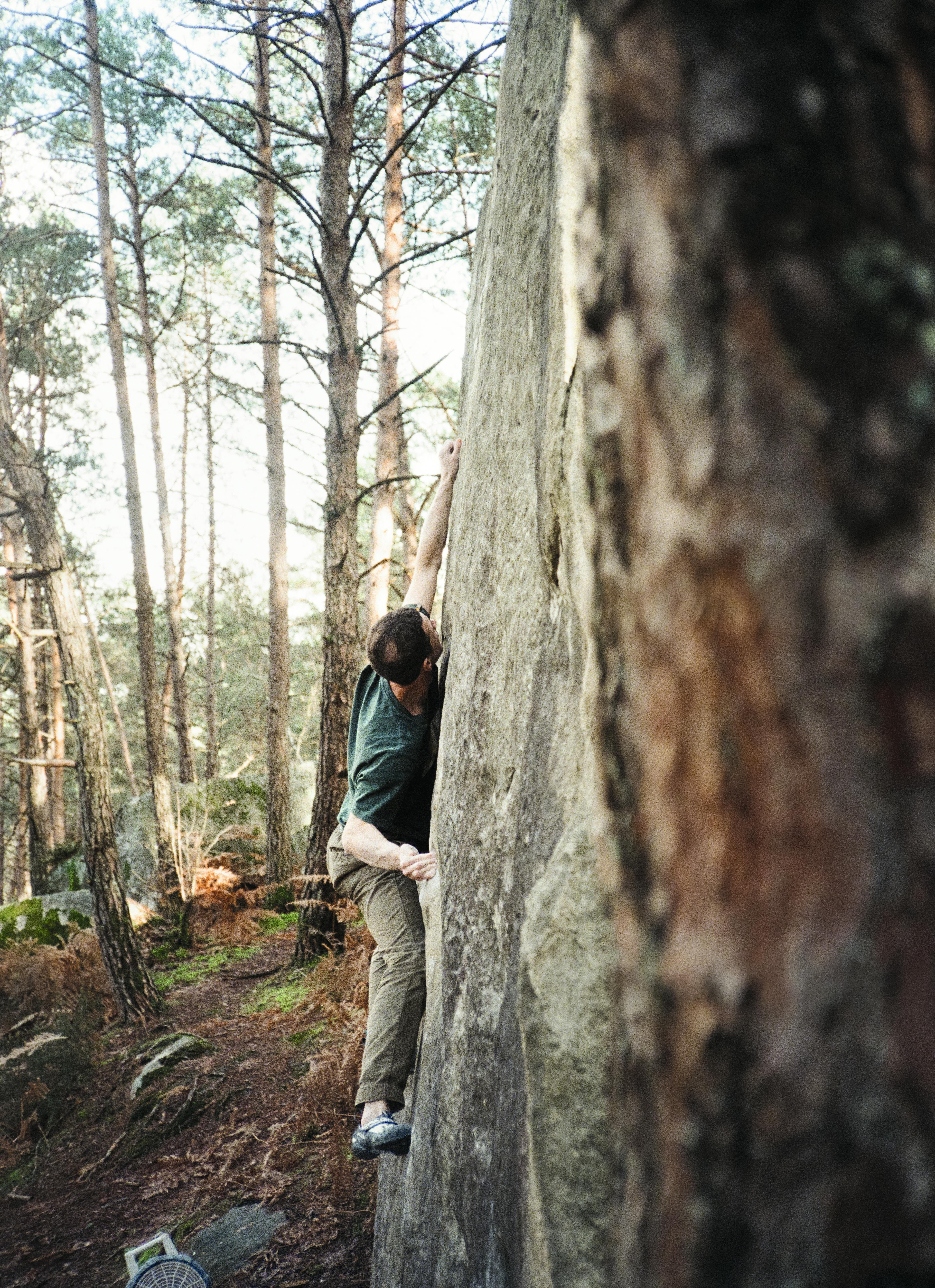
To begin to understand these arrows you must first understand the birth of bouldering in Fontainebleau. Alpinists from Paris wanted to hone their craft, techniques and skills before heading to the mountains. Therefore they started to climb these small boulders closer to home. However, to improve their skills and better practice for their time in the mountains they wanted longer climbs, so they started to link one boulder to another, to another. What Fred Bernick did in 1947 with his paintbrush was plan out one of these routes and permanently mark it on the rock for other climbers to also attempt.
He created the first circuit, an idea that others copied in different areas of the forest. Each creator took their brushes and paint and marked their ideas out on the rock, drawing their own arrows and designs to show others which way to go. Some of these circuits are continuous trails, you leave the ground at the start then follow the arrows and numbers, climbing, jumping, crawling through tunnels and doing whatever it takes to get to the end. They can be strenuous and tough on the body but seeing as they were designed to train for the mountains that was what they needed to be.
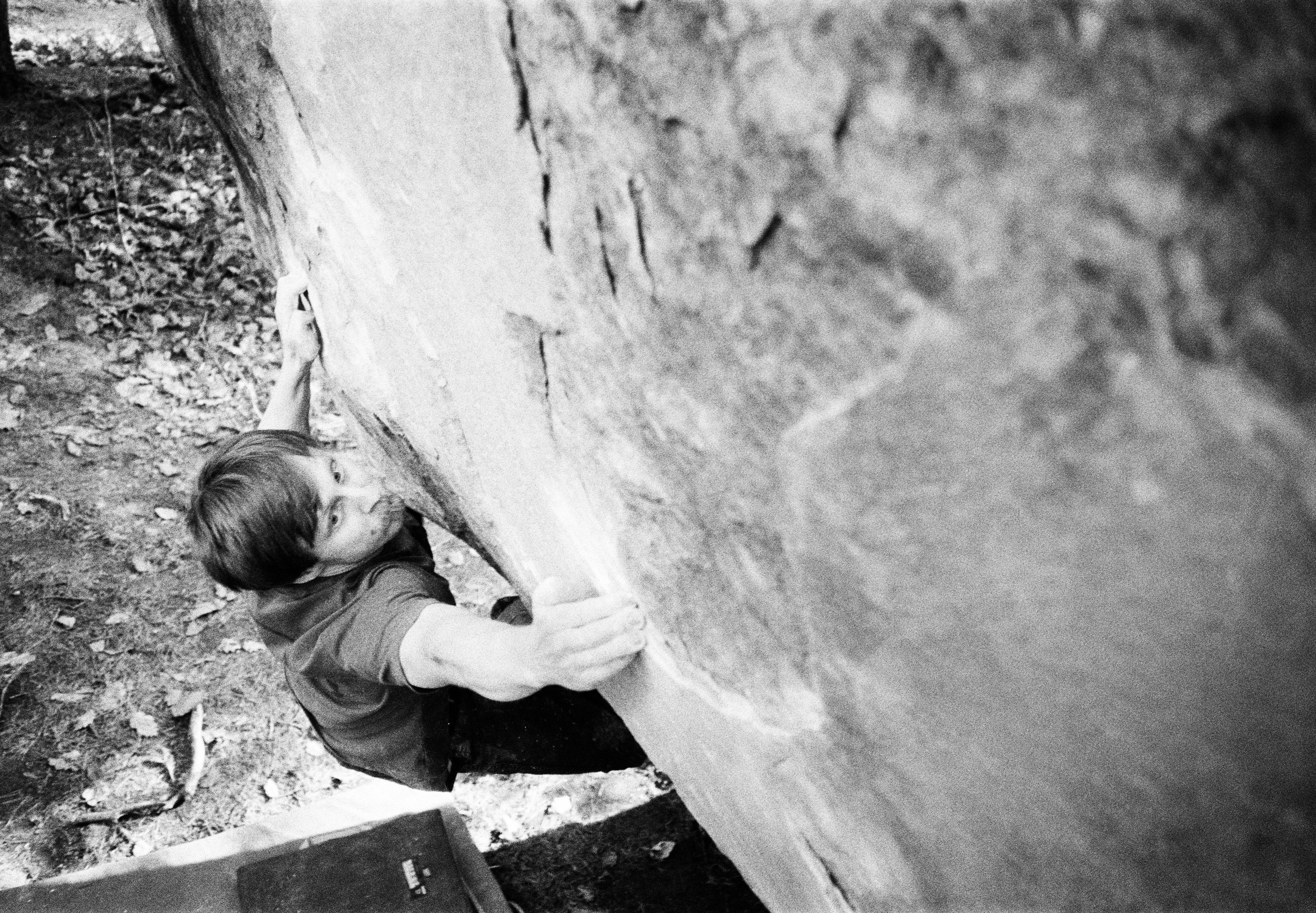
There is a second type of circuit, these have a series of separate boulders and the challenge comes from climbing each one in order throughout the day. These can have just a few boulders in them or 70+ individual problems to do.
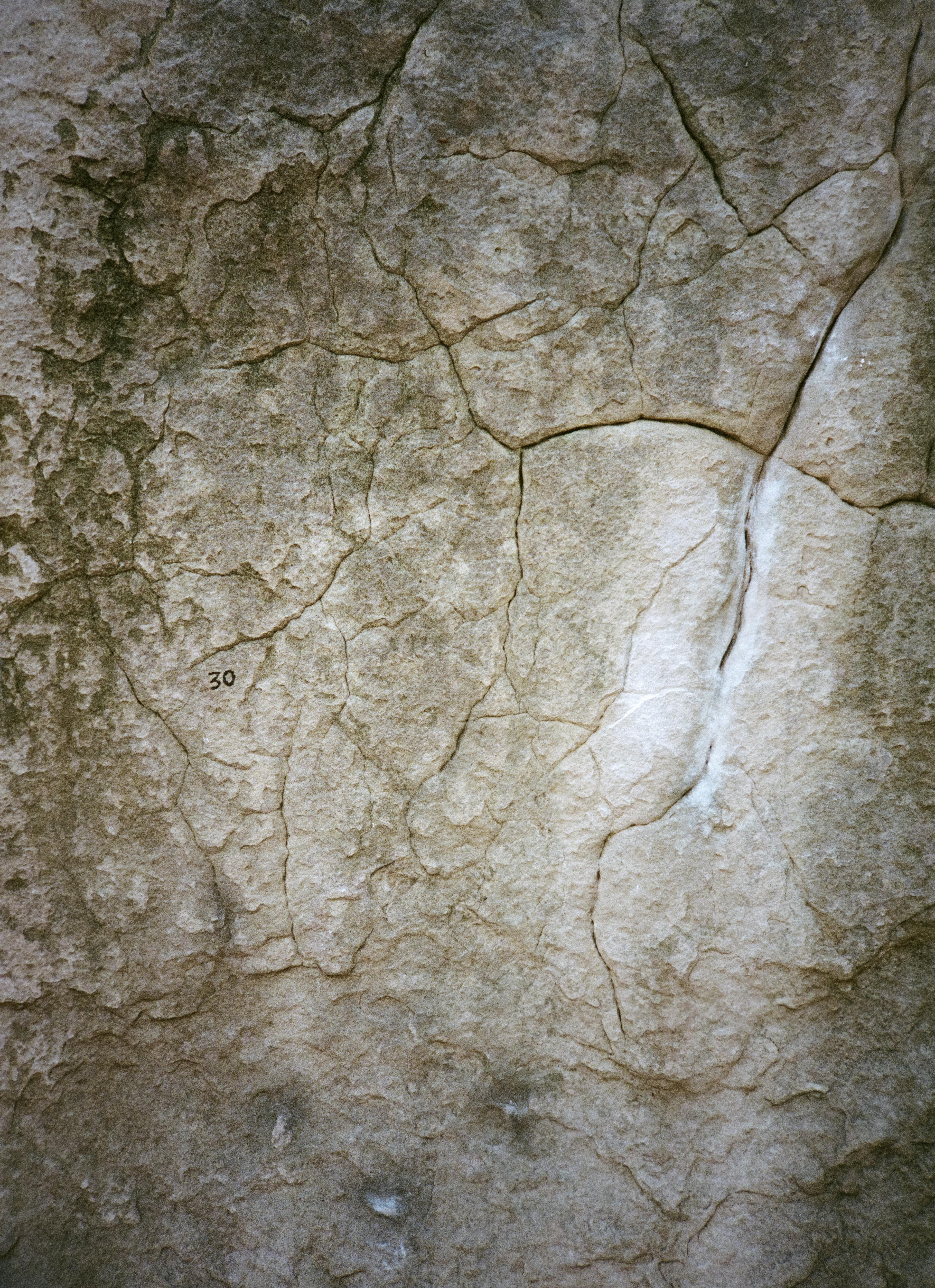
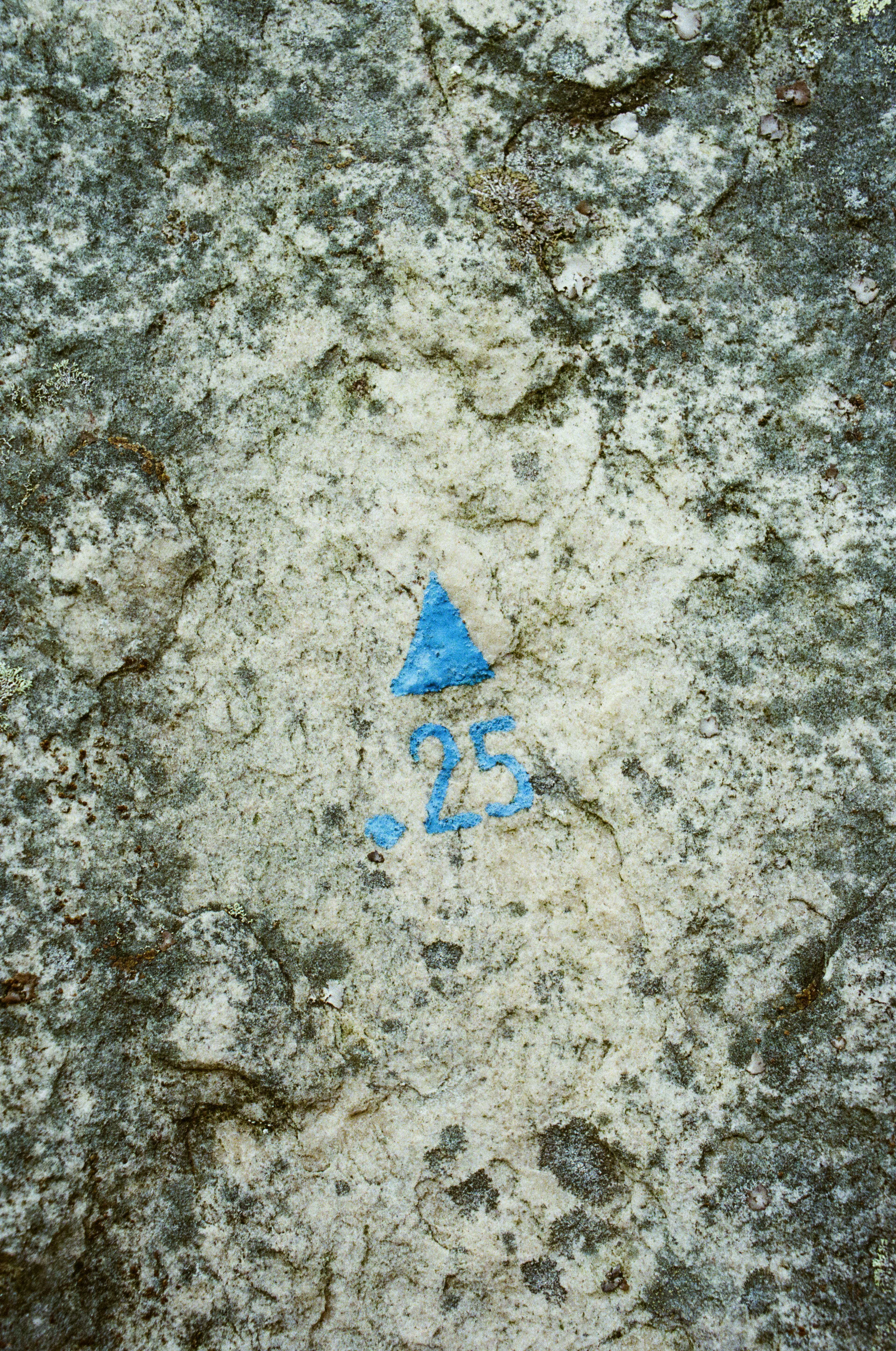
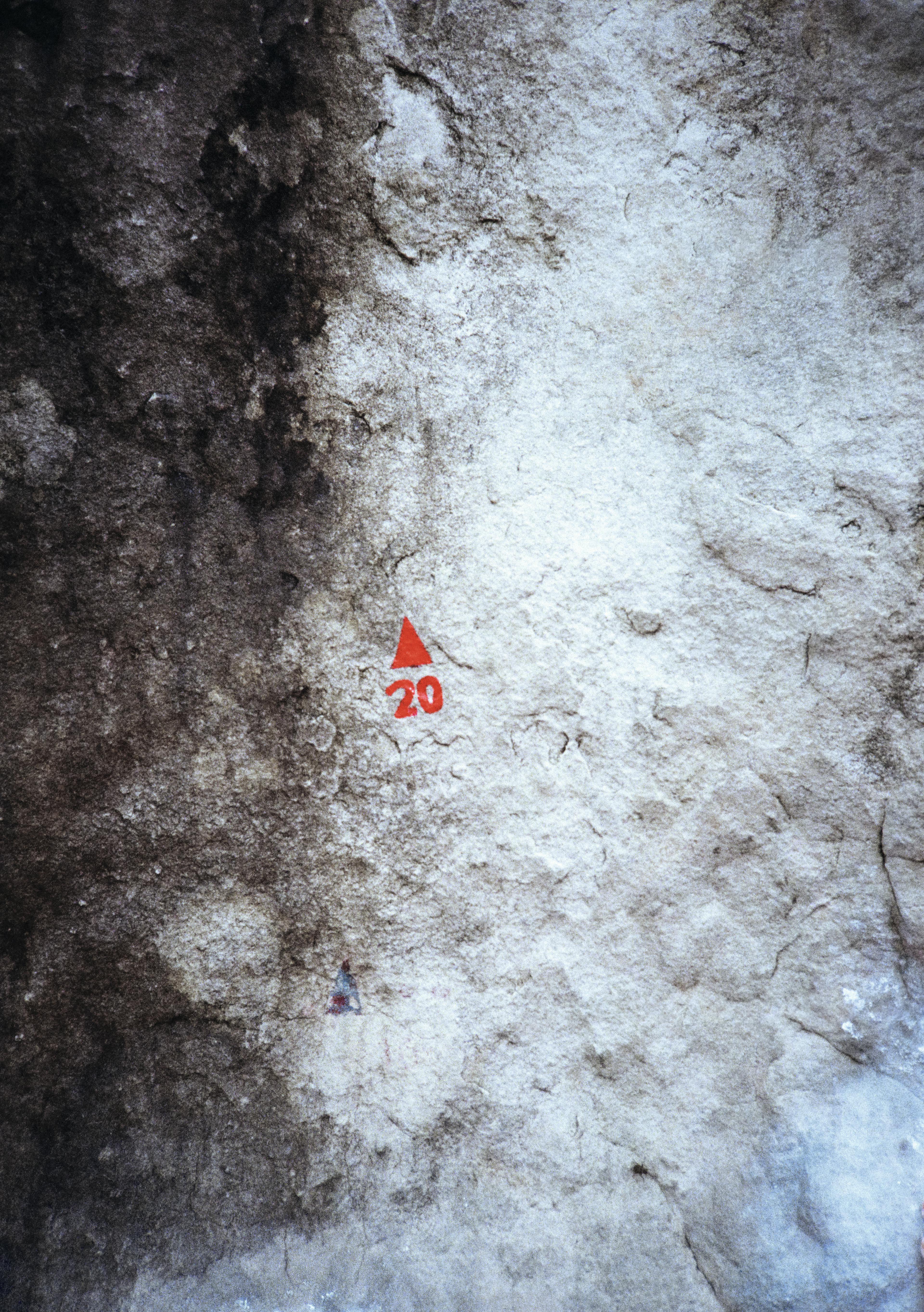
Either way these challenges are marked on the rock with paint. Usually a single arrow and a number for each boulder, this is my favourite part, the bit I really love. The way the paint sits on the uneven surface of the rock, the way the individual painter has designed their arrows. Each person does them differently, each circuit has its own style. I love the beauty of the arrows, I love their imperfect nature that to me makes them perfect. You can't draw a perfect straight line on the texture of the sandstone so it forces the imperfection, which to me makes them all so special, unique and interesting.
The arrows don’t dominate the rock, they are often subtle, not overpowering or detracting from nature, just a little tattoo that adds so much when seen up close. Some have glistening fresh paint and others are hard to see after they have been worn away by years of weather. I like to search for them, spot when they have been rubbed out and updated, edited or renumbered. One rainy day a couple of weeks before attempting that red circuit a Rempart a friend and I had wandered around and scouted it out. We discovered a lot walking around spotting the old arrows while following a map I found online, hand drawn from when it was first painted. There were edits, repainted arrows, numbers not mentioned on the original map and a whole new extension on the far end. It was like looking at history and seeing different people's ideas all spread out in front of our eyes.
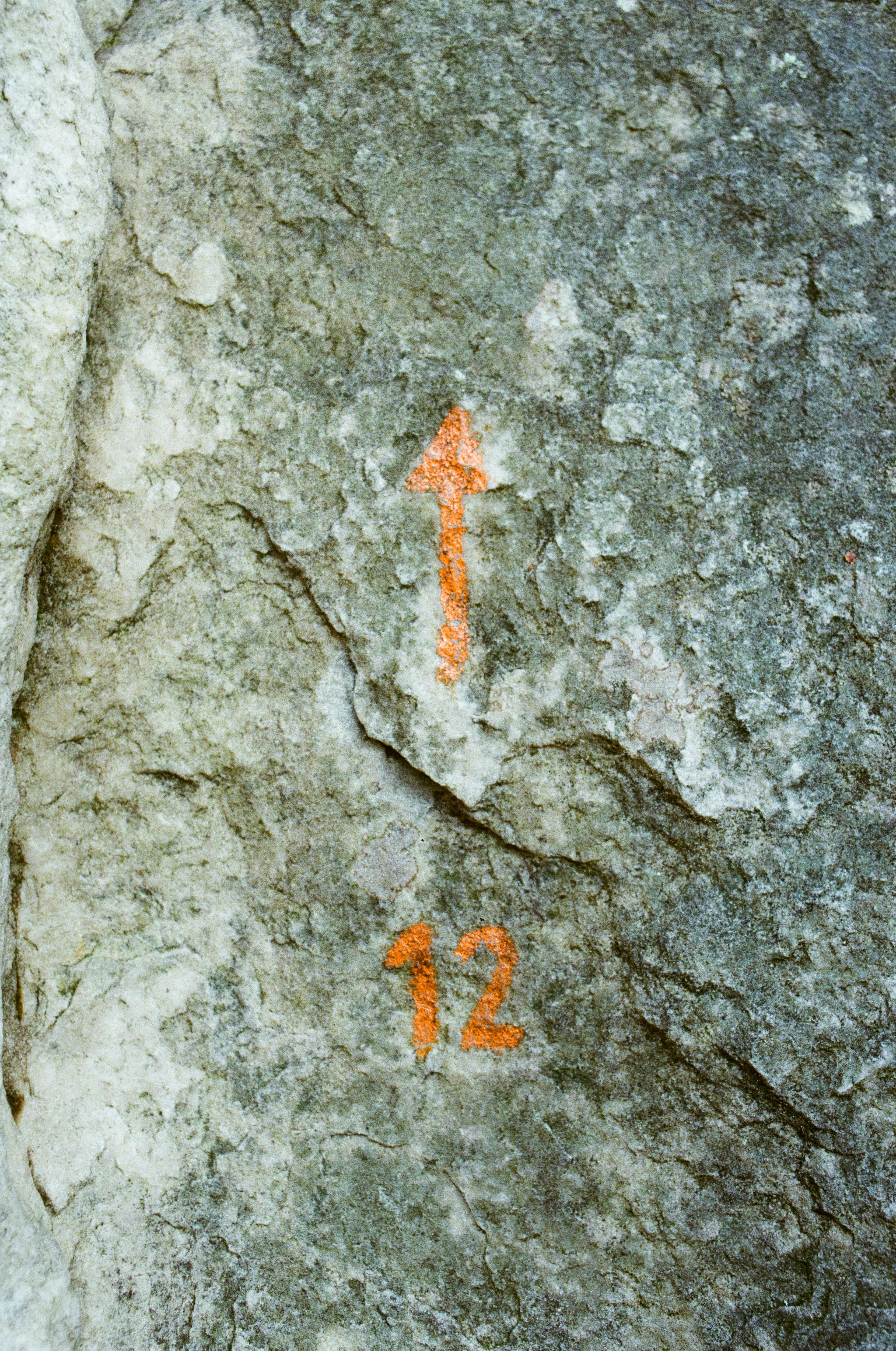
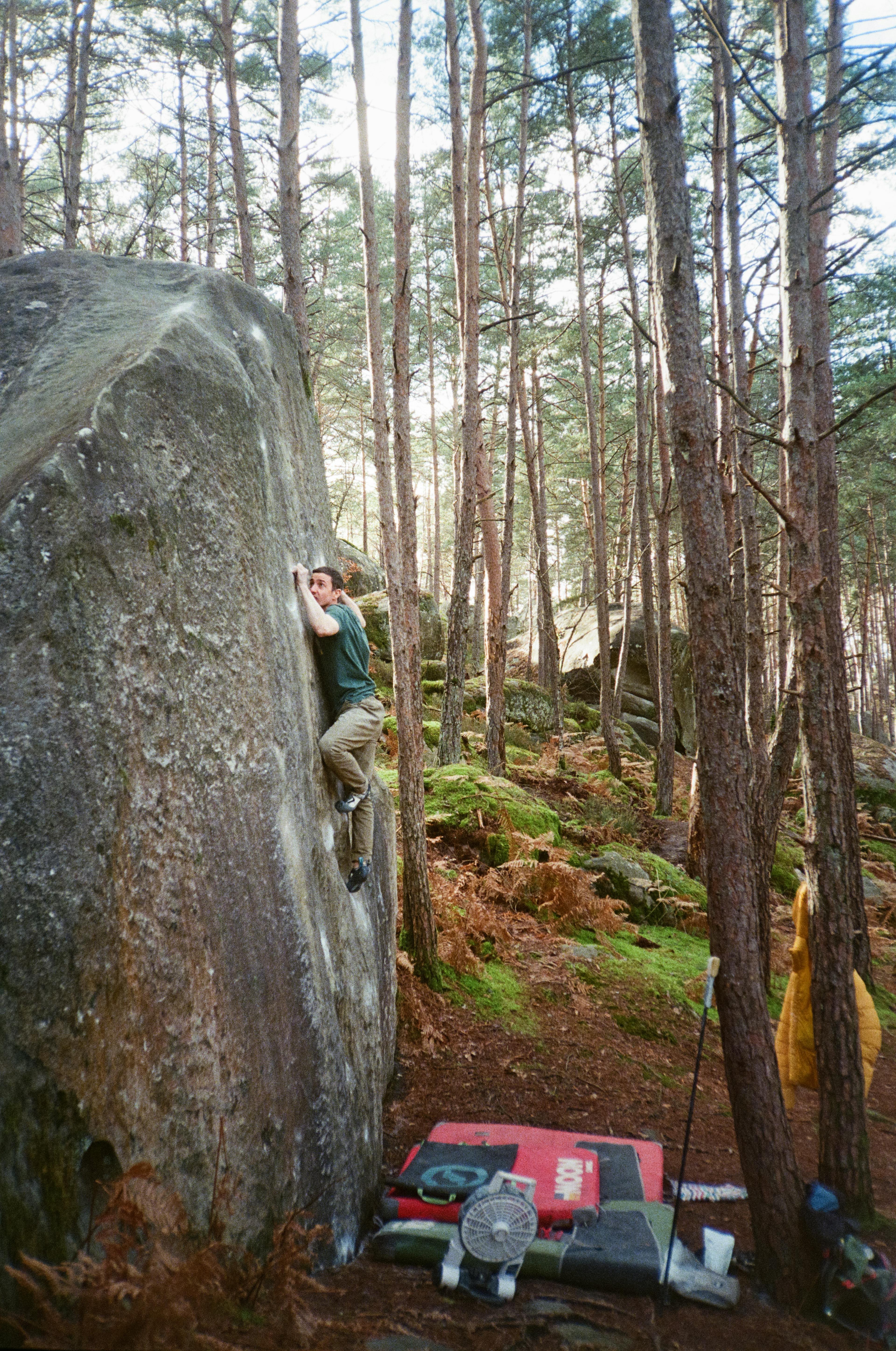
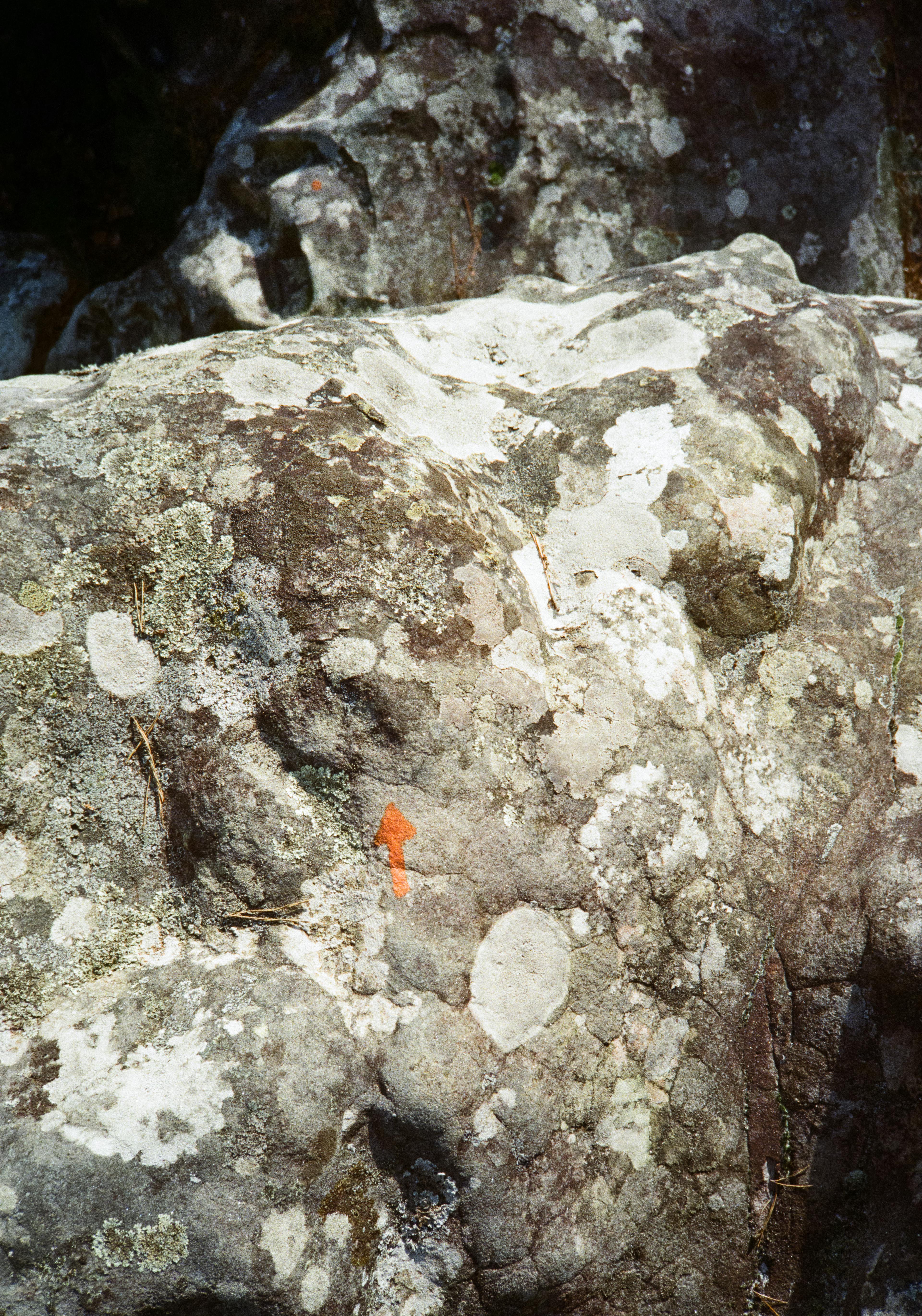
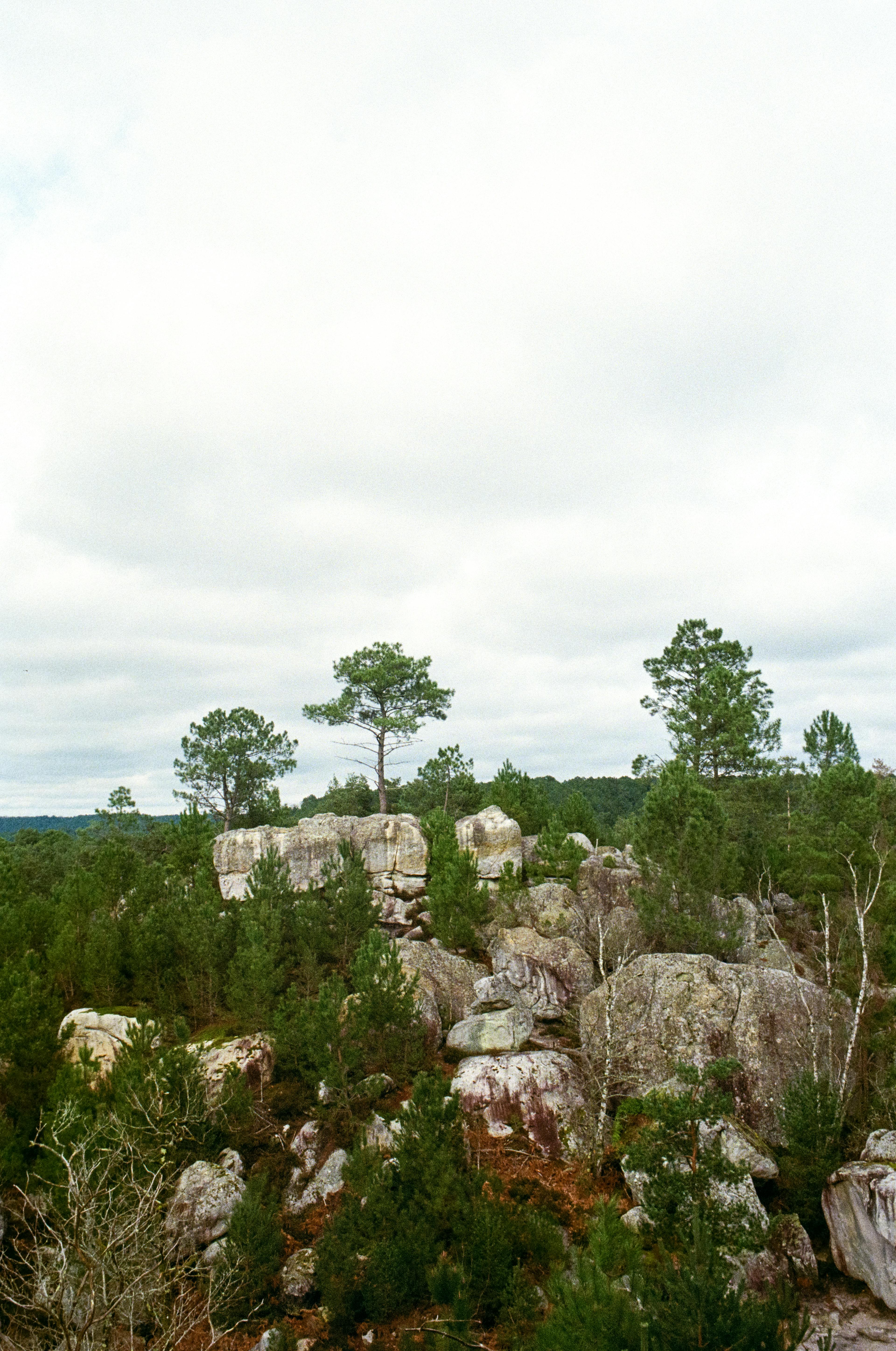
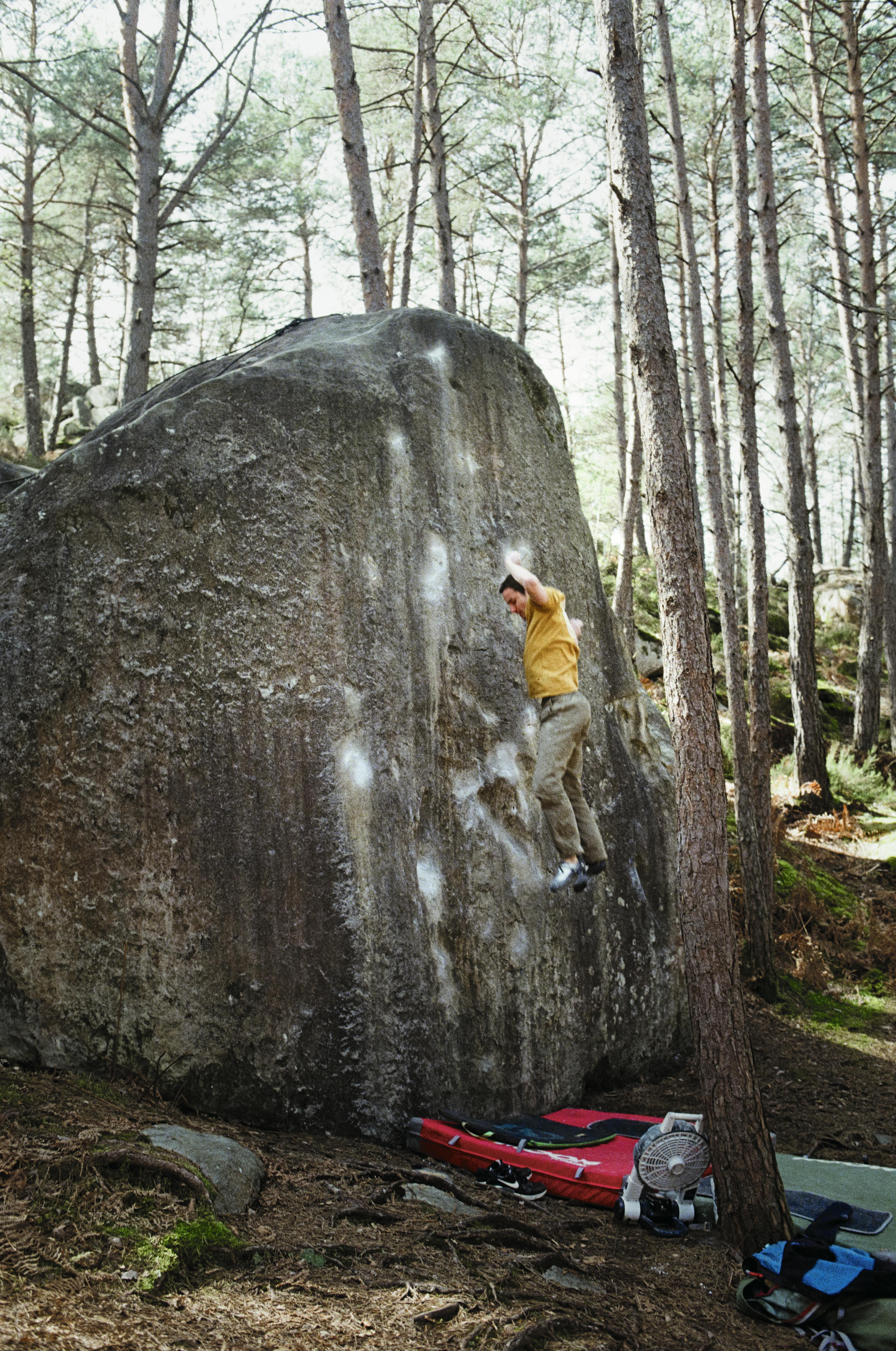
The day I had a go I tried as much as I could to stay on the original route, to feel to the best extent what Fred Burnick had originally planned out. I wasn’t on it perfectly at all times, as moss, bushes and nature had reclaimed parts of the route or hidden the paint. At a point I realised I was far less bold than those training for the mountains all those years ago and backed down to go around a couple of the most audacious parts.
This paint is not just about looks however, that is simply a side effect I greatly enjoy. Each arrow gives a lot of information, not just a direction in which to travel. The colour of paint used often tells you roughly the difficulty you will find, yellow generally being the easiest circuits and the blacks the hardest. The positioning tells you where to begin, with the addition of a tail or a point for less simple or obvious features, additionally you may find a little dot next to the number, a detail that is easy to miss and not commonly known about, this spot of paint points you left or right in the direction of the next number in the circuit.
Not everything follows the rules, there aren’t really any rules though some have attempted to standardise practices to stop the paint getting out of control. An organisation called Le CoSiRoc (Comité de défense des sites et rochers d'escalade - Committee for the Defense of Climbing Sites and Rocks) published a guide in 1982 detailing everything you need to know about the best ways and good practices for painting a circuit and drawing arrows. A good thing that needs doing to protect the forest and rocks, but at the same time I love the totally different markings on each circuit, and the artistic expression of the individual painters. I find it fascinating how each person can draw something as simple as arrows in such a different way to the last person. Some are neat, some are rough, some big, some small, some crudely drawn and some with such incredible attention to detail paid.
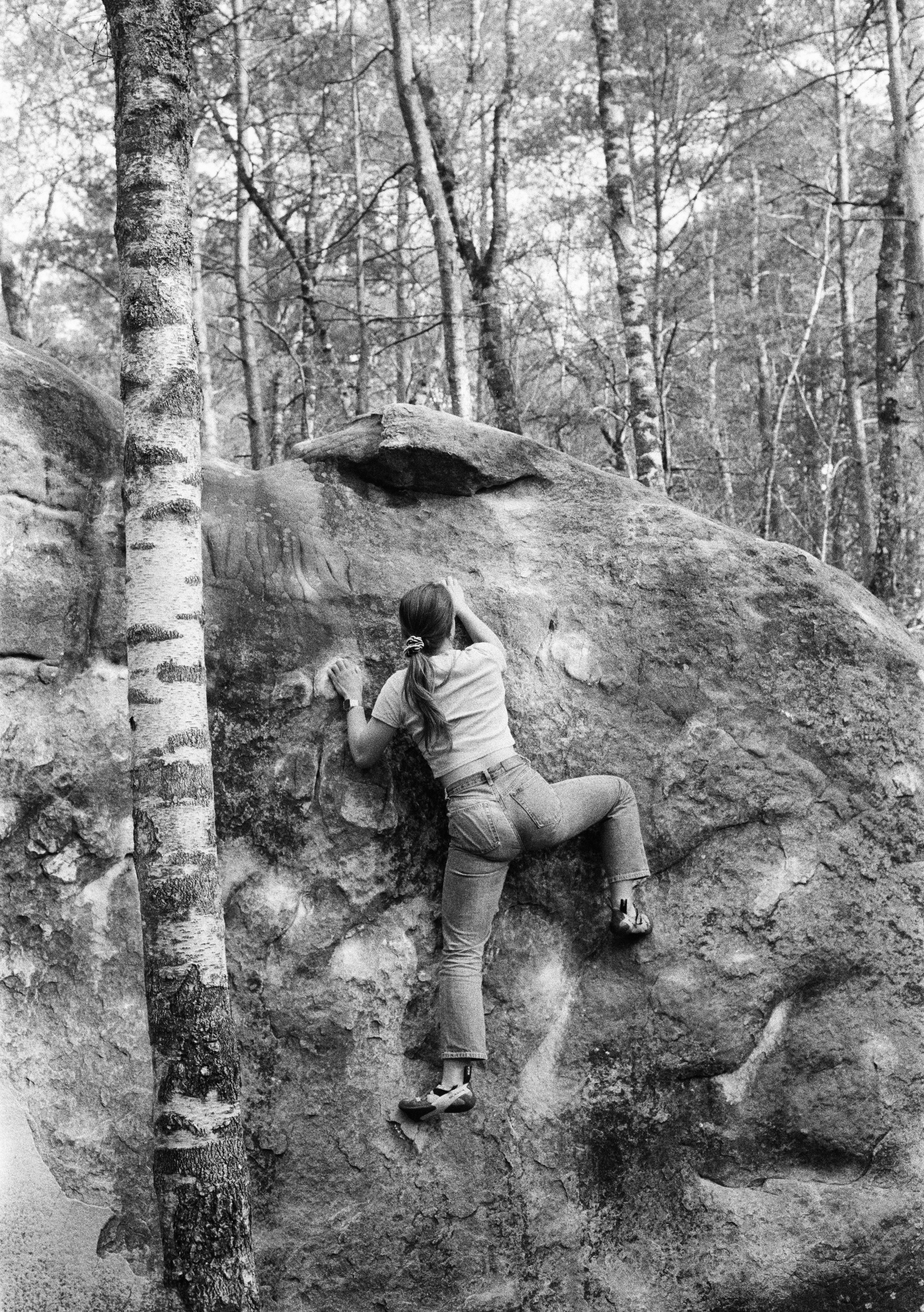
Nowadays bouldering has moved on a long way from simply being a training tool for big alpine accents. The sport stands on its own two legs. It is a sport I enjoy greatly but whenever I return to Font I am drawn to do some of these circuits, they take you on a journey, test you, batter you and show you around a beautiful forest. I really enjoy as I follow the paint how the designers have seen and used the natural landscape describing to you so much with so little. Once you have followed the markings for some time you begin to understand further how they were thinking at the time and what their intentions were.

As I arrived closer to where I had started following these old red arrows I really felt like I had been tested by the old school climbers from almost 80 years prior. I was bruised, bleeding, sweaty and covered in dirt but I’d had an adventure like a child would in a playground.
Being here in this forest, following arrows, climbing rocks and sitting amongst the trees makes me feel like a big kid in an even bigger playground and I have no plans on growing up any time soon.
This article was written exclusively for New Mountain Magazine Issue One. All images copyright Jacob Martin.